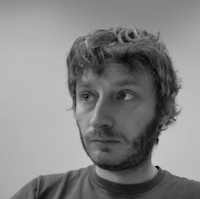
Visiting DERI (wearing unsuitable dressing)

Okay, I just needed some motivation to proudly announce my new home on the Web.

I’m slowly moving turn off the lights, please”, from WordPress to here.

At the moment, I’m writing from Galway, Ireland. I’ll be here for the next two weeks visiting DERI, the most exciting and interesting place on the Earth for who has some kind of interest in Semantic Web technologies.

Here we had the 2nd Sindice Week (the first has been on February, in FBK) that is, mainly, one week-long meeting discussing the next steps about the Semantic Web index. We discussed a lot about the next features and how to consolidate the existent ones.

And, yes, we had a lot of nice stout beers.


You can edit this ad by going editing the index.php file or opening /images/exampleAd.gif

SameAs4J: little drops of water make the mighty ocean

Few days ago Milan Stankovic contacted the Sindice crew informing us that he wrote a simply Java library to interact with the public Sindice HTTP APIs. We always appreciate such kind of community efforts lead to collaboratively make Sindice a better place on the Web. Agreeing with Milan, we decided to put some efforts on his initial work to make such library the official open source tool for Java programmers.

That reminded me that, few months ago, I did for sameas.org the same thing Milan did for us. But (ashamed) I never informed those guys about what I did.

Get the whole story »

FBK, Any23 and my involvement in Sindice.com

After almost two years spent working at Asemantics, I left it to join the Fondazione Bruno Kessler (FBK), a quite large research institute based in Trento.

These last two years have been amazing: I met very skilled and enthusiastic people working with them on a broad set of different technologies. Every day spent there has been an opportunity for me to learn something new from them, and at the very end they are now very good friends more than colleagues. Now Asemantics is part of the bigger Pro-netics Group.

Moved from Rome, I decided to follow Giovanni Tummarello and Michele Mostarda to launch from scratch a new research unit at FBK called “Web of Data”. FBK is a well-established organization with several units acting on a plethora of different research fields. Every day there is the opportunity to join workshops and other kind of events.

Get the whole story »

Cheap Linked Data identifiers

This is a (short) technical post.

Everyday, I face the problem of getting some Linked Data URIs that uniquely identify a “thing” starting from an ambiguous, poor and flat keyword or description. One of the first step dealing with the development of application that consumes Linked Data is to provide a mechanism that allows to link our own data sets to one (or more) LoD bubble. To gain a clear idea on why identifiers matters I suggest you to read this note from Dan Brickley: starting from some needs we encountered within the NoTube project he clearly underlined the importance of LoD identifiers. Even if the problem of uniquely identifying words and terms falls in the biggest category usually known as term disambiguation, I’d like to clarify here, that what I’m going to explain is a narrow restriction of the whole problem.

What I really need is a simple mechanism that allows me to convert one specific type of identifiers to a set of Linked Data URIs.

Get the whole story »

RWW 2009 Top 10 Semantic Web products: one year later…


Just few days ago the popular ReadWriteWeb published a list of the 2009 Top Ten Semantic Web products as they did one year ago with the 2008 Top Ten.

This two milestones are a good opportunity to make something similar to a balance. Or just to do a quick overview on what’s changed in the “Web of Data”, only one year later.

The 2008 Top Ten foreseen the following applications, listed in the same ReadWriteWeb order and enriched with some personal opinions.

Get the whole story »

the italian political activism and the semantic web

Beppe Grillo

A couple of years ago, during his live show, the popular italian blogger and activist Beppe Grillo provided a quick demonstration about how the Web concretely realizes the “six degrees of separation”. The italian blogger, today a Web enthusiast, shown that it was possible to him to get in contact with someone very famous using a couple of different websites: imdb, Wikipedia and few others. Starting from a movie where he acted, he could reach the movie producer and the producer could be in contact with another actor due to previous work with this latter and so on.
This demonstration consisted in a series of links that were opened leading to some Web pages containing information where extract the relationships that the showman wants to achieve.
This gig came back to my mind while I was thinking on how, what I call the “Linked Data Philosophy”, is impacting on the traditional Web and I imagined what Beppe Grillo could show nowadays.
Just the following, simple, trivial and short SPARQL query:
<insert here the SPARQL query>
Although Beppe is a great comedian it may be hard also for him making people laugh with this. But, the point here is not about laughs but about data: in this sense, the Web of Data is providing an outstanding and an extremely powerful way to access to incredible twine of machine readable interlinked data.
Recently, another nice and remarkable italian initiative appeared on the Web: OpenParlamento.it. It’s, mainly, a service where the Italian congressmen are displayed and they are positioned on a chart basing on the similarity of their votes on law proposals.
Ok. Cool. But how the Semantic Web could improve this stuff?
First of all, it would be very straightforward to provide a SPARQL endpoint providing some good RDF for this data. Like the following example:
<rdf:RDF>
<rdf:Description rdf:about:”http://openparlamento.it/senate/Mario_Rossi”>
<rdf:type rdf:resource=”http://openparlamento.it/ontology/Congressman”/>
<foaf:name>Mario Rossi</foaf:name>
<foaf:gender>male</foaf:gender>
<openp:politicalGroup rdf:resource=”http://openparlamento.it/groups/Democratic_Party”/>
<owl:sameas rdf:resource=”http://dbpedia.org/resource/Mario_Rossi”/>
</rdf:Description>
</rdf:RDF>
where names, descriptions, political belonging and more are provided. Moreover a property called openp:similarity could be used to map closer congressmen, using the same information of the already cited chart.
Secondly, all the information about congressmen are published on the official Italian chambers web site. Wrapping this data, OpenParlamento.it could provide an extremely exhaustive set of official information and, more important, links to DBpedia will be the key to get a full set of machine processable data also from other Linked Data clouds.
How to benefits from all of this? Apart the fact of employing a cutting-edge technology to syndicate data, everyone who wants link the data provided by OpenParlamento.it on his web pages can easily do it using RDFa. Like the follow example, where a fragment of an HTML page representing a news on the above congressman:
<div>
</div>
contains some RDFa linking that page to the OpenParlamento.it cloud.
With these technologies as a basis, a new breed of applications (like web crawlers, for those interested in SEO) will access and process these data in a new, fashionable and extremely powerful way.

A couple of years ago, during his live show, the popular italian blogger and activist Beppe Grillo provided a quick demonstration about how the Web concretely realizes the “six degrees of separation”. The italian blogger, today a Web enthusiast, shown that it was possible to him to get in contact with someone very famous using a couple of different websites: imdb, Wikipedia and few others. Starting from a movie where he acted, he could reach the movie producer and the producer could be in contact with another actor due to previous work with this latter and so on.

Get the whole story »